




The New Reality of Search in 2026
Search engines no longer function as simple directory indexes that match user query keywords to landing page titles. Over the past year, Google AI Overviews and conversational AI search engines have taken center stage, fundamentally changing how users interact with online information. Instead of clicking through three or four organic blue links, users now receive direct, synthesized answers pulled from multiple web sources right at the top of the search engine results page.
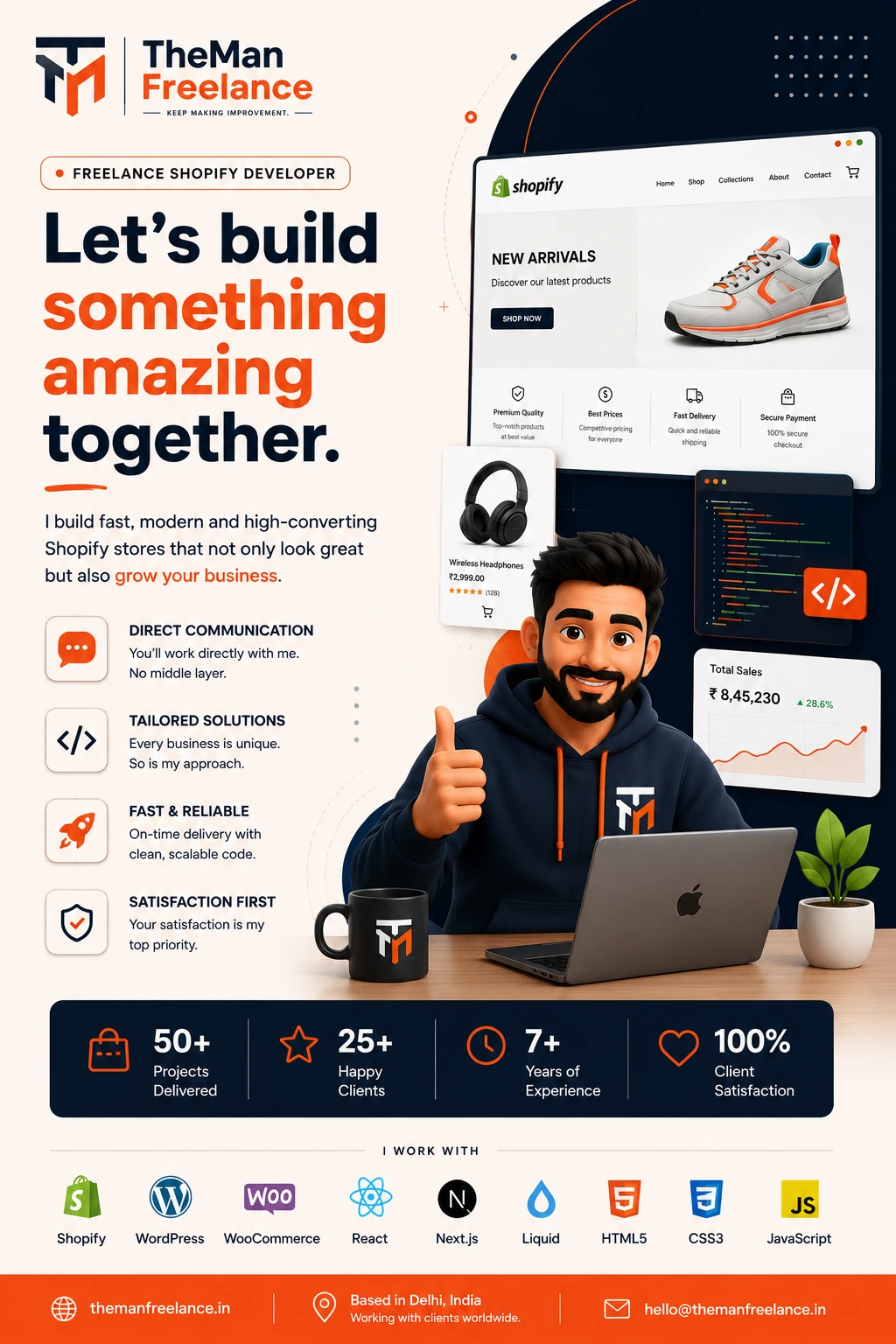
As an independent developer running Theman Freelance, I have spent the last 7+ years building, refactoring, and optimizing custom WordPress, WooCommerce, and Shopify platforms. Across more than 150 completed projects, one consistent pattern has emerged: sites built purely on legacy SEO tactics are losing ground to modern web architectures designed for fast data extraction, clear entity mapping, and technical precision. Winning visibility today requires a refined approach known as Generative Engine Optimization (GEO).
Mastering Google AI Overviews SEO does not mean throwing away traditional optimization fundamentals. Instead, it requires expanding your technical foundation to ensure AI search models can effortlessly crawl, parse, interpret, and cite your content. Whether you manage a high-traffic blog, an enterprise WordPress platform, or an active Shopify store, this guide outlines the exact technical standards and content strategies needed to secure your place in AI search rankings throughout 2026.
Core Concepts & Key Challenges Across Modern Platforms
To succeed with AI search optimization, it is essential to understand how generative search engines process web pages differently from traditional crawlers. Traditional search engines indexed individual web pages using keywords, backlinks, and user engagement signals. Generative engines process web pages as interconnected entities, extracting granular facts, technical tables, and authoritative statements to assemble dynamic summaries.
The Rise of Generative Engine Optimization (GEO) vs SEO
Traditional search engine optimization focused heavily on rank position for specific short-tail and long-tail phrases. In contrast, generative engine optimization focuses on authority, structured clarity, and citation context. AI engines evaluate whether your content provides reliable primary-source evidence that can be confidently integrated into a generated answer.
Platform-Specific Challenges for Content Owners and Developers
Different site owners face distinct hurdles when attempting to optimize website for AI search:
- WordPress Users & Bloggers: In WordPress Development outdated themes, bloated page builders, and excessive plugin scripts generate messy DOM structures. This code bloat makes it difficult for AI parsers to extract core textual content accurately.
- Shopify Store Owners: In Shopify Development liquid template bloat, missing variant schema, and generic manufacturer product descriptions prevent AI Overviews from accurately pulling specs, pricing, and availability details.
- Digital Marketers & SEO Specialists: The rise of zero-click searches means top-of-funnel informational traffic is declining. Marketers must optimize for conversion-focused citation placements within AI summaries.
- Small Business Owners: Competing against massive directory sites requires proving deep localized authority and hyper-specific operational expertise that generic AI models cannot hallucinate.
Understanding these hurdles allows us to systematically upgrade site architecture, performance pipelines, and content structuring for Google AI Mode SEO.
Deep-Dive Technical & Practical Strategy for AI Search
Securing consistent AI search visibility requires strict technical optimization. AI web crawlers prioritize pages that render fast, deliver clean structural markup, and offer explicit relationships between concepts.
1. Technical SEO Checks for AI Crawlers
Ensure your server configuration and robots.txt file do not accidentally block AI fetchers or delay dynamic rendering. AI summarizers rely on rapid document parsing. If your site takes several seconds to execute client-side JavaScript, Google’s synthesis bots may bypass your page entirely in favor of a faster primary source.
- Eliminate render-blocking JavaScript and CSS resources.
- Implement server-side rendering (SSR) or hybrid static generation for dynamic storefronts and complex custom layouts.
- Verify that critical content resides directly in the initial HTML response rather than hiding behind lazy-loaded interactive scripts.
2. Advanced Structured Data & Schema Implementation
Structured JSON-LD schema acts as an explicit translation layer for AI search engines. While traditional SEO uses schema primarily for rich snippets, generative engines rely on JSON-LD to confirm facts, entity relationships, and operational data.
- Product & Merchant Schema: Detail SKU numbers, price ranges, real-time inventory, and verified customer review aggregates on Shopify and WooCommerce stores.
- Article & TechArticle Schema: Define clear
authorentities, publication dates, and explicitaboutandmentionsparameters to link your content to recognized industry topics. - FAQ Page & How To Schema: Provide clear, direct Q&A syntax that AI models can quote directly inside conversational answers.
3. Deep Internal Linking and Entity Hub Architecture
AI search models construct knowledge graphs across your domain. A random, flat internal linking structure makes it difficult for algorithms to understand topic depth. Build structured content hubs where broad parent guides link directly to technical child pages, using explicit contextual anchor text that reinforces subject-matter relationships.
4. Original Content, Direct Data, and Source Authority
Generative AI engines actively avoid summarizing generic rehashed content. To earn citations, your pages must offer unique value: original benchmark data, custom developer insights, hands-on case observations, or proprietary process breakdowns. Feature explicit author bios highlighting verified industry experience to satisfy Google’s E-E-A-T requirements.
5. Multimodal Image & Media Optimization
Google AI Overviews frequently display visual cards alongside text summaries. Optimize your media assets to capture these visual placements:
- Use descriptive file names (e.g.,
custom-wordpress-schema-architecture.webp). - Provide contextual, accurate
alttext that explains what the image visually demonstrates. - Wrap images in explicit HTML5
<figure>and<figcaption>tags to tie the visual asset directly to surrounding text.
Key Highlights, Standards & Myths
Comparison: Traditional SEO vs AI Search Optimization
| Optimization Vector | Traditional SEO Focus | AI Search / GEO Focus (2026) |
|---|---|---|
| Target Goal | Rank #1 on blue links page | Featured source citation in AI Overviews |
| Content Structure | Long-form keyword targeting | Modular, concise, entity-rich answers |
| Technical Requirement | Basic indexability & mobile check | Fast SSR HTML, deep JSON-LD entity mapping |
| Authority Signal | Backlink quantity & PageRank | Factual accuracy, original data, E-E-A-T |
Step-by-Step AI Optimization Checklist
- [ ] Perform a technical audit to remove render-blocking scripts and speed up TTFB (Time to First Byte).
- [ ] Validate all JSON-LD schema using official testing tools, ensuring no missing entity attributes.
- [ ] Convert walls of text into structured semantic HTML (using clean
<h2>,<h3>,<ul>, and<table>formatting). - [ ] Add direct summary boxes or key take-away sections near the top of technical articles.
- [ ] Monitor Google Search Console for dynamic, multi-word long-tail query impressions.
Debunking Common AI Search Myths
- Myth 1: Traditional SEO is dead. Reality: AI models still rely on core crawlability, site health, and authority signals. GEO sits on top of standard SEO foundations.
- Myth 2: You must use AI to write content to rank in AI search. Reality: Generative engines actively prefer authentic, human-written content backed by first-hand experience and original evidence.
- Myth 3: Schema markup guarantees an AI Overview citation. Reality: Schema provides clear context, but your content must still offer superior factual value and site performance to earn citations.
Real-World Insights from Theman Freelance Projects
Working directly with clients across custom WordPress builds and Shopify optimizations has provided clear proof of how clean code directly drives generative search visibility.
Case 1: WordPress Code Optimization for Technical Services
A B2B technical service provider running on a custom WordPress setup was struggling with invisible content. Their previous theme relied heavily on nested page-builder shortcodes, creating thousands of lines of useless div tags that obscured key technical service details.
By refactoring the site into a lightweight custom theme, stripping unnecessary plugins, and implementing nested Organization and Service schema, we reduced page payload by 65%. Within eight weeks of launch, Google began pulling the client’s custom service explanations directly into top-tier AI Overview summaries for specialized industry queries.
Case 2: WooCommerce Custom Variant Schema
An e-commerce store with an extensive catalog had difficulty appearing in conversational product recommendations. Their off-the-shelf theme failed to expose individual product variant specs to web crawlers.
I built a tailored PHP script that dynamically generated comprehensive Product JSON-LD schema for every stock variation, including precise dimensions, compatibility attributes, and real-time stock statuses. This code upgrade directly boosted their product visibility across Google AI Mode queries, leading to a noticeable spike in high-intent referral conversions.
Actionable Takeaways & Next Steps for 2026
Adapting your website for AI search does not require completely rebuilding your brand online. It requires refining your site’s codebase, organizing your content clearly, and prioritizing fast, transparent technical architectures.
- Clean Up Technical Debt: Audit your site’s performance. Clean up bloated scripts, resolve broken internal redirects, and ensure your HTML payload renders quickly without relying on heavy client-side execution.
- Structure Your Content for Extraction: Review your top-performing pages. Add concise summary paragraphs, structural lists, and clear heading hierarchies that allow AI systems to summarize your primary points easily.
- Enhance Entity Context: Deploy comprehensive schema markup across your WordPress or Shopify site to clearly connect your brand, products, and authors to recognized topics.
If you want direct developer support to overhaul your platform’s technical foundation, clean up theme performance, or implement custom schema markup, working directly with a dedicated specialist makes all the difference. Explore custom WordPress development, Shopify optimizations, and technical performance services with Theman Freelance to keep your digital footprint ahead of shifting search trends in 2026.