






Section 1: The Modern Product Page — Where Conversions Actually Happen
Earning traffic to your store has never been more expensive. Ad costs across search and social channels climb year over year, making customer acquisition one of the steepest challenges for modern eCommerce brands. Yet, many store owners still funnel expensive, highly qualified traffic straight to product pages built on bloated default themes, slow apps, and confusing user interfaces.
At Theman Freelance, my independent web development practice led by Hemant, I have spent 7+ years deep in theme code, custom Liquid, APIs, and performance engineering. Over the course of 150+ completed projects for growing D2C brands, boutique fashion houses, and specialty retailers, one reality stands out above all else: your product page is your ultimate sales closer. It is not merely an online catalog entry; it is an interactive negotiation table.
Mastering Shopify product page optimization in 2026 requires moving away from the old playbook of stacking third-party apps that slow down your theme. Instead, high-converting stores rely on thoughtful user experience, native Shopify architecture, hyper-fast mobile interactions, and deep contextual storytelling. Whether you manage an established online catalog or operate a fast-moving direct-to-consumer label, refining your product template is the highest-leverage investment you can make this year.
Service Guarantees & Key Highlights
Custom Shopify Store Development
Build a custom Shopify store tailored to your products, brand identity, customer journey and eCommerce requirements. If Shopify is the right fit for your business, my freelance Shopify development service covers custom storefronts, theme work, integrations and performance improvements.
Shopify Theme Customization
Customize your Shopify theme with improved layouts, branded components and functionality designed around your store.
Shopify Liquid Development
Develop custom Shopify Liquid templates, sections and components for functionality beyond standard theme settings.
Shopify 2.0 Development
Build flexible Shopify Online Store 2.0 experiences using sections, templates and dynamic content for easier store management.
Shopify Store Redesign
Modernize an outdated Shopify store with improved visual design, navigation, mobile experience and conversion-focused UX.
Custom Sections & Blocks
Create reusable Shopify sections and blocks that give your team greater control over homepage, landing pages and product content.
Shopify Metafields & Metaobjects
Use Shopify metafields and metaobjects to create structured, dynamic product, collection and brand content.
Product Page Optimization
Improve Shopify product pages with better product information, media, variants, trust elements and conversion-focused layouts.
Collection & Navigation Optimization
Improve collections, menus, filters and product discovery so customers can find relevant products faster.
Shopify App & API Integrations
Connect Shopify with apps, external platforms and APIs to automate workflows and extend your store's functionality.
Custom Shopify Functionality
Develop custom Shopify features when existing themes or apps cannot provide the exact functionality your business needs.
Mobile-First Responsive Design
Create responsive Shopify storefronts that deliver a consistent and easy shopping experience across mobile, tablet and desktop.
Shopify SEO Optimization
Improve Shopify technical SEO, site structure, metadata, internal linking and product visibility for organic search.
Store Speed & Performance Optimization
Improve Shopify store performance by optimizing theme code, images, scripts and third-party app impact.
Conversion-Focused eCommerce UX
Improve the shopping journey through better product discovery, page layouts, trust signals and friction-free customer experiences.
Shopify Migration & Setup
Move your eCommerce business to Shopify with structured store setup, product migration and essential configuration.
Shopify Maintenance & Technical Support
Keep your Shopify store reliable with ongoing updates, troubleshooting, improvements and technical development support.
Core Concepts & Key Challenges Across Modern Retail
Online shoppers arrive with higher expectations and shorter attention spans than ever before. When a shopper visits a product page, they are looking for reasons to trust you, but they will leave at the slightest sign of friction. Different sectors face unique challenges when attempting to increase Shopify conversion rate numbers:
- Fashion and Apparel Brands: Customers struggle with sizing confidence and fit anxiety. Generic size charts hidden in tabbed drawers lead to abandoned checkouts and high return rates.
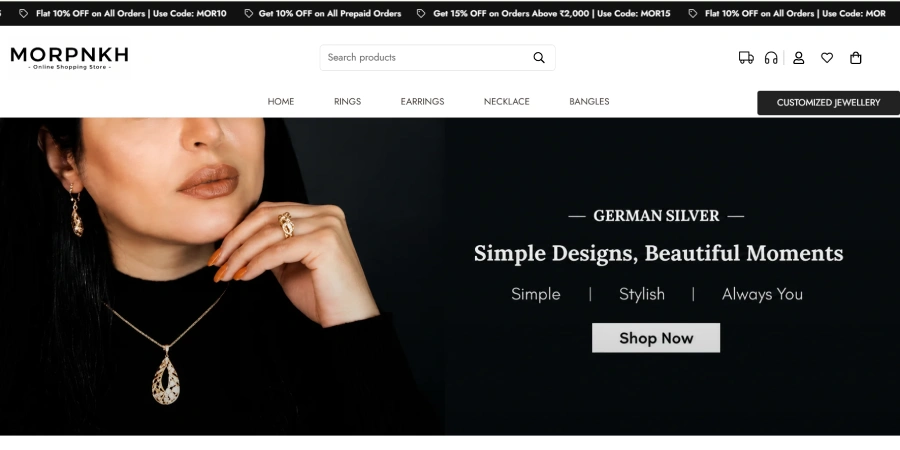
- Jewelry and Luxury Labels: Buyers demand fine details, metal purity specifications, authentic gem documentation, and macro-level imagery. If the UI feels cheap or sluggish, customer trust evaporates immediately.
- Fast-Growing D2C Businesses: Scaling brands often install a dozen different apps for reviews, countdown timers, bundling, and upsells. This creates “app bloat,” degrading Google Core Web Vitals, causing layout shifts, and driving potential buyers away.
- Shopify Marketing Agencies & Online Retailers: Marketers generate brilliant creative campaigns, only to see bounce rates spike on mobile devices because hero galleries fail to swipe smoothly or dynamic checkout buttons take seconds to load.
Addressing these friction points requires understanding that Shopify product page design is not just aesthetics—it is an exercise in removing doubt and technical latency at every click.
Section 3: Deep-Dive Technical and Practical Strategy
To outpace competitors in 2026, your product templates must marry technical precision with persuasive customer psychology. Below is the technical roadmap I implement across custom development projects to drive sustainable revenue growth.
1. Native Architecture Over App Congestion
One of the most common issues I uncover during store audits is third-party script congestion. Every app injecting external JavaScript over the network adds render-blocking overhead. In 2026, modern Shopify themes (OS 2.0 and beyond) provide powerful native blocks, Liquid sections, and app embeds that allow developers to code features directly into the theme files.
Instead of running separate monthly subscription apps for accordions, size guides, badges, and trust icons, build them natively into your Liquid templates. Native code executes synchronously with the theme, eliminates recurring app fees, keeps page weight minimal, and guarantees stable Core Web Vitals scores.
2. Leveraging Shopify Metafields and Metaobjects for Rich Storytelling
Modern eCommerce shoppers do not read giant blocks of plain body text. They scan for key benefits, technical dimensions, materials, and care instructions. Shopify metafields and Shopify metaobjects represent one of the most powerful features for customized merchandising.
By defining custom metafields for attributes such as “Fabric Weight,” “Model Height & Size Worn,” “Origin,” or “Gemstone Cut,” you can surface structured data visually across your templates. Metaobjects take this a step further by allowing you to create reusable content models—such as a designer profile, an ingredient glossary, or comprehensive care guides—linked directly to specific products without touching code every time a new SKU launches.
3. Precision Shopify Product Page SEO & Structured Data
Organic discoverability begins on the product page. Solid Shopify product page SEO depends on two core pillars: technical schema and content clarity. Ensure your theme outputs fully valid Product and Offer JSON-LD structured data. This schema must automatically communicate:
- Accurate variant-level pricing and availability
- Unique GTIN / UPC / ISBN identifiers
- Aggregated review ratings and total review counts
- Direct shipping costs and estimated delivery windows
When search engines parse clean structured data, your listings qualify for rich product snippets in search results, lifting organic click-through rates significantly before shoppers even land on your site.
Section 4: Key Highlights & Industry Standards for 2026
Review this actionable checklist of Shopify product page best practices 2026 to identify high-impact opportunities on your own storefront:
The Essential Product-Page UX Checklist
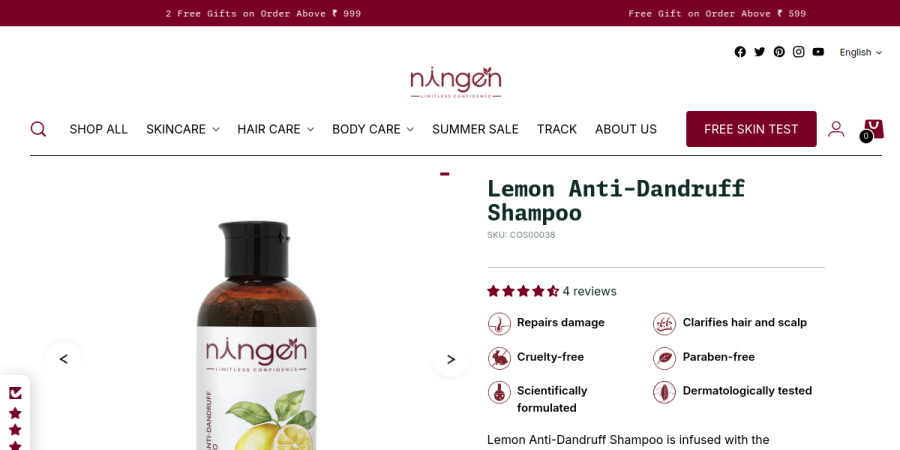
- Persuasive Product Titles & Descriptions: Replace generic supplier names with benefits-focused headings. Use skimmable bullet points highlighting what the product does for the user, followed by clear technical specifications.
- Shopify Product Images & Video Media: Serve next-gen media formats (WebP and AVIF) with explicit
widthandheightattributes to prevent Cumulative Layout Shift (CLS). Implement zoomable high-resolution imagery and native video loops that showcase movement, drape, and scale without lagging. - Variant Selectors & Interactive Size Guides: Avoid clunky drop-down menus on mobile. Use visually clean pill buttons or color swatches. For sizing, integrate interactive size guides that correlate measurements directly to specific model measurements.
- Reviews and Trust Signals: Position verified buyer star ratings immediately under the product title. Place photo and video reviews further down the page, augmented by direct answers to frequently asked customer questions.
- Mobile-First Layouts: Over 70% of eCommerce sales happen on mobile devices. Design the viewport so the product gallery, title, pricing, and variant options fit neatly above or just within initial scroll reach.
- Shopify Add to Cart Optimization: Implement an unobtrusive, sticky “Add to Cart” bar that appears when the main CTA scrolls out of view. Ensure the primary button uses high-contrast styling and features an instantaneous loading state to confirm the item was added without jarring page reloads.
- Continuous A/B Testing: Never guess what works. Test single variables systematically: sticky cart bar versus standard view, plain text benefit pills versus icon badges, and one-click “Buy Now” options versus standard slide-out drawer carts.
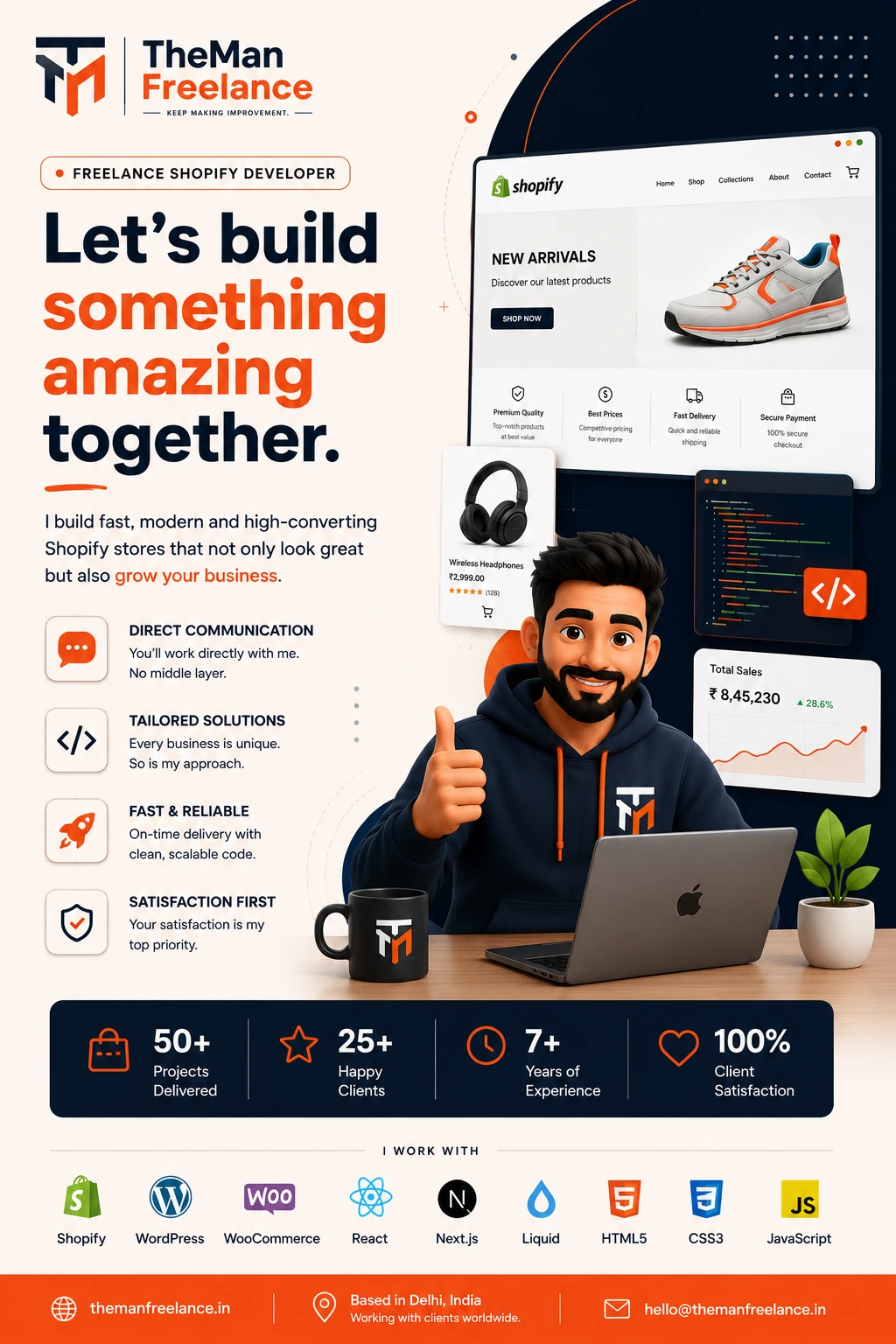
Need an expert eye on your theme code? Through Theman Freelance, clients work directly with me—Hemant, an experienced developer with 7+ years of expertise. No agency account managers, no diluted communication. Just clean, high-performing code designed to increase your sales.
Section 5: Real-World Case Examples & Developer Insights
Over my past 150+ completed client engagements across Shopify and WooCommerce, custom technical refinements have regularly unlocked substantial revenue jumps. Here are two real-world examples illustrating what purposeful Shopify product page customization achieves:
Case Study 1: The High-End Jewelry Brand (Variant & Specification Clarity)
A bespoke jewelry brand came to me with low mobile conversion rates despite strong organic traffic. Their existing product page used multiple third-party apps to display ring metal choices (14k, 18k, Platinum) and stone grades. The page suffered from a 4.8-second Largest Contentful Paint (LCP) time, and mobile shoppers were constantly confused about what was included with each selection.
I stripped out the external apps and built a custom Liquid section using native variant pickers paired with Shopify metafields for stone specifications, metal weights, and lead times. We added a dynamic visual badge showing current stock status and an interactive ring sizer popup integrated directly into the theme layout. The result: page weight dropped by 62%, LCP improved to 1.6 seconds, and the store saw a 28% increase in mobile conversion rates over the subsequent quarter.
Case Study 2: The Direct-to-Consumer Apparel Label (Mobile Cart Friction)
An emerging sustainable fashion retailer struggled with heavy cart abandonment. Their product pages featured extensive visual stories, but their CTA was buried underneath long paragraphs, and variant selection was confusing on smartphones.
We re-architected the template to adopt a mobile-first hierarchy: swipeable aspect-ratio preserved image galleries, clean variant swatch pills with real-time inventory validation, and a sticky add-to-cart footer bar that engaged as soon as the main buy button scrolled past. By refining their Shopify add to cart optimization mechanics and using native drawer cart upsells, the brand lifted overall average order value (AOV) by 14% and lowered mobile abandonment by 19%.
Actionable Takeaways & Your Next Steps
Transforming your product pages into dependable conversion engines does not require rebuilding your entire catalog from scratch tomorrow. Focus on deliberate, incremental upgrades:
- Run an App Audit: Review every script running on your product template. Uninstall plugins that can easily be replaced with lightweight, native theme code.
- Elevate Mobile Ergonomics: Test your product page on an actual smartphone. Can you choose a size, evaluate dimensions, and tap the checkout button with one thumb easily? If not, adjust your UI spacing and CTA placement.
- Structure Your Data with Metafields: Move repetitive product copy out of the rich text editor and into organized metafields. This makes your layout consistent and speeds up future catalog updates.
- Strengthen Trust Near the Trigger: Make sure shipping estimates, return windows, and payment security badges sit right beneath your Add to Cart button, resolving objections at the precise moment of purchase.
Optimizing your Shopify store is an ongoing journey of testing, measuring, and refining. When you eliminate friction and prioritize clean code, your conversion rates will reflect the difference.